搜尋

揭仲的國防與中共軍事專題研究

國防, 中共軍事, 南海問題 (email : ly10717b@gmail.com)

十二月 2018

共軍陸軍合成營發展概況(轉載自2018年12月25日"蜂評網")

共軍目前正推動的軍事改革(以下簡稱軍改),一個重要的項目就是將陸軍、空軍空降兵與海軍陸戰隊傳統的「營」,調整組建為新型態的「合成營」,以加強數位化部隊建設,逐步實現部隊編成的「小型化、模塊化、多能化」,希望能使新編制型態的單位既能遂行獨立作戰,也能參與聯合或協同作戰。


事實上,共軍對合成營的探討與論證,早在這次軍改正式啟動前多年就已展開。至少在2007年中共軍方相關的刊物中,就已開始對合成營進行探討;從2009年到2014年間,更在多個軍區與集團軍中透過實兵演習進行驗證。在這次軍改,則確立陸軍作戰部隊的主體將朝「軍—旅—營」三級制落實,且戰鬥部隊的旅、營級單位,絕大多數改編為合成旅與合成營。改制後的合成營是中共地面部隊在現代資訊化戰爭中,遂行「陸上聯合作戰的基本合成單位」、「陸上獨立作戰基本戰術分隊」和模組化作戰編組的標準元件。


目前共軍陸軍合成營可能區分為重型、中型和輕型三種。雖然中共官方迄今仍未說明編制細節,但依據中共媒體所透露的訊息,共軍陸軍合成營的編制,依照功能可區分為「指揮機構模塊(組)」與「部隊模塊(組)」。


在「指揮機構模塊(組)」部分,以往共軍陸軍步兵營、坦克營(戰車營)的營部只有營長、教導員、副營長,軍醫,文書,通信員等人數較少,並未設置參謀人員。在新制合成營中,最大特色是增加為數5人的參謀組織,包括職稱原本為「參謀長」的首席參謀、作戰參謀(主管訓練與作戰計畫)、情報參謀(主管偵察與通信)、火力參謀(主管射擊)與戰勤參謀(主管後勤保障)。因此,合成營指揮模組中就具備較強的情報搜集處理、決策計劃、協調控制、綜合保障等能力,能獨立組織指揮戰鬥行動。


共軍陸軍合成營的營部連,主要配備裝設「一體化指揮平台」的裝甲指揮車,外加通信車、裝步戰鬥車和其他運輸載具,以從事與上、下級和友軍單位的通聯。合成營營部還有1個直屬偵查排,下轄武裝偵察分隊、技術偵察分隊、手持的小型偵察無人機分隊,裝備有1輛雷達偵察車和2輛光學偵察車。


在「部隊模塊(組)」部分,推估合成營可能轄6個連,依照合成營的型態可以區分為:

  1. 重型合成營轄2個裝甲步兵連與2個戰車連;中型合成營(包括兩棲合成營)轄3個裝甲步兵連與1個突擊車連;輕型合成營則可能轄裝甲步兵連與步兵連計3個,及1個輕型突擊車連。
  2. 1個火力連:重型與中型合成營配備6至9門120公厘自走迫榴炮,及3輛搭載人員攜行式防空飛彈的高機動防空車;輕型合成營的火力連則配備重機槍、反戰車飛彈、迫擊砲與120公厘火箭彈。
  3. 1個支援保障連:轄修理排、醫護排、工兵防化排、運輸排與炊事排各一,但實際執行任務時會混合編成模組化的「綜合保障隊」,直接伴隨所派出的聯兵戰鬥隊行動。
  4. 合成營除前述固定編制,還會按作戰功能再細化為步兵模組、偵察模組、火力模組等10餘個功能模組,並注重在日常訓練中融合交叉使用。

改制的共軍陸軍合成營,具有下列特性:

  1. 中共陸軍原本以「團」為基本戰術單位,「師」為高級戰術單位。軍改後,合成營取代團成為基本戰術單位,合成旅取代師成為高級戰術單位,使指揮體制朝資訊化作戰的扁平式體制轉變,減少縱向指揮層級,增大同一指揮層級資訊的橫向流動。
  2. 合成營的指揮車未來可能配備到各排,且「理論上」所有戰甲車都可能配備作戰資訊終端、北斗衛星定位系統和電子作戰地圖,能實施網路化條件下的指揮控制和精確火力打擊。
  3. 合成營配備大量的偵察情報裝備,包括空中偵察裝備與衛星偵察接收設備,根據平可夫先生的研究,能偵察發現和監控高度0至5000公尺、範圍0至150公里內的各空中、地面、電磁等目標;對戰場的態勢偵察範圍大大增加,也能引導超視距火力與武裝直升機等對敵實施精確打擊,戰鬥力大幅提升。
  4. 合成營的機動力、偵察監視範圍與火力支援範圍等,均較傳統的營大幅增加,使其作戰範圍正面擴增為10到15公里,縱深也拉大為20到30公里。
  5. 換言之,「理論上」軍改後做為基本戰術單位的合成營,比原本的團在人數上大幅減少,但整體戰鬥力卻較強。

(作者揭仲為中華戰略前瞻協會研究員/淡江大學國際事務與戰略研究所博士)
http://www.fengbau.com/?p=5770

揭仲:解放軍武嚇台灣,台灣國防預算做了哪些變動?(引自2018年12月21日之"端傳媒")

隨著近年共軍空軍藉實施「繞島巡航」以對蔡政府施壓的次數劇增,2019年國軍空軍用於採購各型軍機、發動機、雷達、各式武器與設施所需零附件的預算,達到2017年的兩倍。

隨著近年共軍空軍藉實施「繞島巡航」以對蔡政府施壓的次數劇增,2019年國軍空軍用於採購各型軍機、發動機、雷達、各式武器與設施所需零附件的預算,達到2017年的兩倍。在六都市長大選結束不到一個月,沈寂了半年的解放軍軍機、軍艦,再度出現在台灣周邊。12月18日上午,包括「轟六」、「運八」、蘇30等各型戰機從廣東惠陽等地起飛,穿越巴士海峽到達台灣東南方空域,之後循原航線返回。兩艘作戰艦艇同時在台灣東南防空識別區外西太洋海域航行,與空中機隊進行協同訓練。

時值年底,正是立法院審議2019年度預算的時刻,這是蔡英文政府本屆任期第三個,也是最後一個完整的會計年度。但與2017、18這兩個會計年度相比,2019年這份預算在今年年初到年中的編訂過程中,中華民國的安全形勢已經出現了巨大的變化。

首先,隨著兩岸政治氣氛持續惡化,北京對台灣的武力施壓不斷提升。例如2018年5月11日,中共海軍作戰編隊在環台航行時,最近時距離蘇澳僅有不到56公里;同日中共空軍也實施南北「雙向繞飛」台灣,創下共軍海空軍「同日、雙向、三批」聯合繞行台灣以東的紀錄。

另一方面,美國總統川普(特朗普)則簽署了《台灣旅行法》,美國聯邦參眾兩院也先後通過2019年度《國防授權法》,替深化台北與華府間的軍事交流,創造了有利的條件。

中共對台灣軍事施壓力道逐漸加大,而美國卻也同時加強了與台灣的安全合作。加上民進黨政府推動的若干國防政策逐漸上路,這些都讓2019年的國防預算,呈現出不同樣貌,以回應這些新形勢。

(全文請至 端傳媒 觀看)

https://theinitium.com/article/20181221-opinion-jiezhong-taiwan-military/


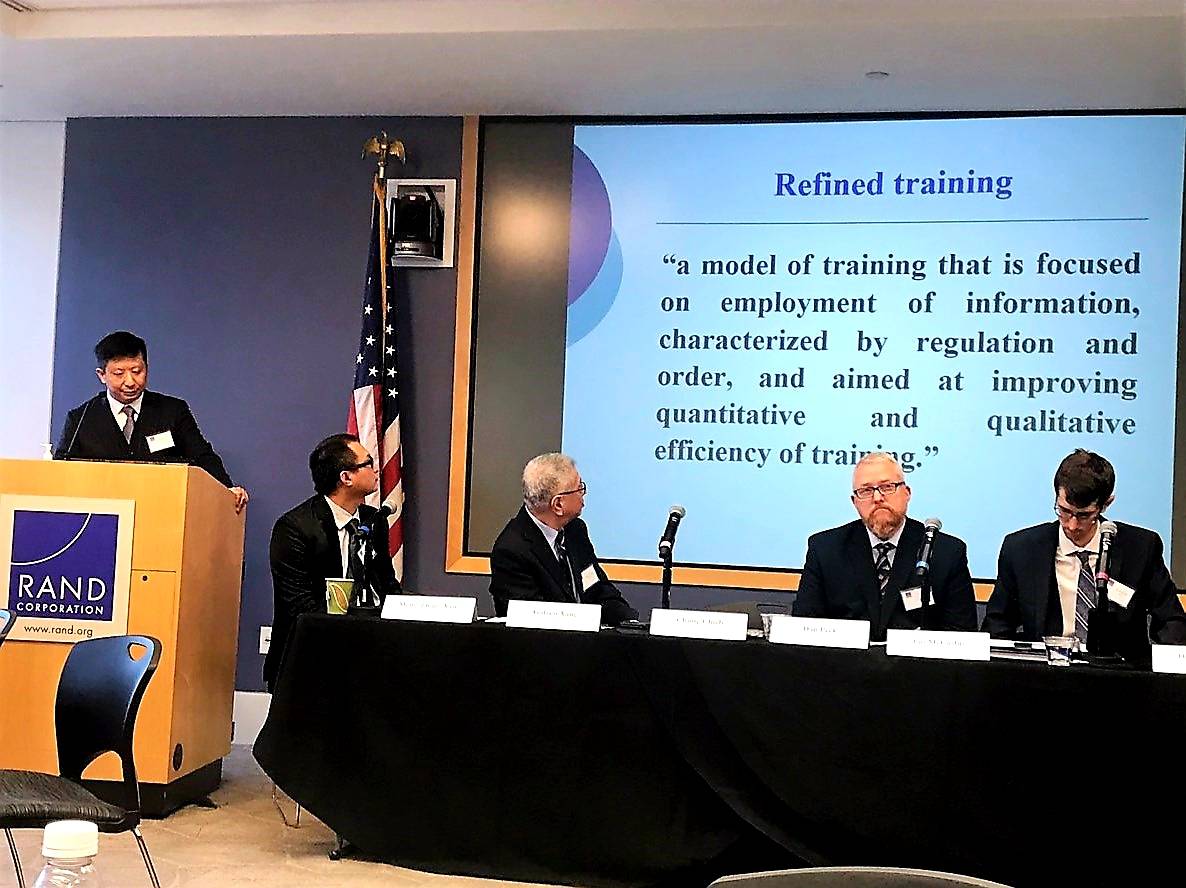
“Off-Script: How PLA training got real"論文摘要, 與楊念祖老師共同發表於2018年11月30日之 “2018 CAPS-RAND-NDU PLA Conference", 美國維吉尼亞州蘭德公司

After the PLA completed preliminary adjustments to its command and control mechanism, joint operations command mechanism, force structure and troop organization, “comprehensive enhancement of realistic combat training” has become its next-phase focus of reform. 

To push military training reform further ahead, the PLA revised its “Outline of Military Training” at the end of 2017 and put the revised edition into practice on Jan. 1, 2018 as the basis for deepening realistic military training.

The newest edition of “Outline of Military Training” is based on the demands of “refined training” in the new age of information warfare. Through subdivision of military training into more specific parts, training objectives are quantified, with each training course, stage, level and service member required to reach standards. The aim is to ensure that units at all levels put training content into practice according to unified standards and quantitative and qualitative requests.

Under the guidance of the revised “Outline of Military Training,” the PLA is very likely to place emphasis on areas such as “confrontational training,” “operational command training and training of new types of combat forces,” “mission topic training and all processes system of systems training,” and “enhancement of base training and training performance evaluation up to the level of realistic combat training.” The aim is to bring military training as close to real-life combat situations as possible. However, problems with “personnel training,” “command platform for training purposes,” “specialized blue army,” “specialized training base,” and “training content” are yet to be solved. The PLA still needs quite some time to reach the goal of modernization.

“PLA Army combined arms battalion and their effects on China’s preparations for an attack on Taiwan" 論文摘要 (發表於2018年10月26日之"2018 Conference on China Military Modernization")

To cope with the demands of “integrated joint operations(一體化聯合作戰)”, a new operational mode still being explored by the PLA, includes in this round of military reform the transformation of traditional army battalions into a new type of battalion known as “combined arms battalion(合成營)” in an effort to enable the PLA to move toward a “smaller, modularized and multi-functional(小型化、模塊化、多能化)” force structure.

    If the PLA attacks Taiwan, the basic tactics for its ground forces to land on Taiwan will be to “destroy nodes, choose most vulnerable sites to land and rapidly gain control(節點摧毀、擇弱登陸、快速奪控)”. But the PLA’s traditional three-tier “division-regiment-battalion” system is in practice an order of battle that cannot function effectively in campaigns against Taiwan because of limitations caused by the island’s topography. Framed within such traditional structure, PLA troops, as the offensive side, will find it hard to break through the defense of Taiwan, the defensive side.

    PLA Army combined arms battalions feature capability to land in smaller areas, greater flexibility in forming interoperable capabilities with other specialty arms, and higher levels of informationization. They are suitable to be used in amphibious assaults on Taiwan. The PLA may use combined arms battalions as the backbone of a modular force against Taiwan that receives reinforcements from other arms or units, such as special operations, army aviation, amphibious elements subordinate to group armies, air force’s airborne branch, and elite troops of the marine corps. It poses a great threat to the security of Taiwan.

在WordPress.com寫部落格.

向上 ↑