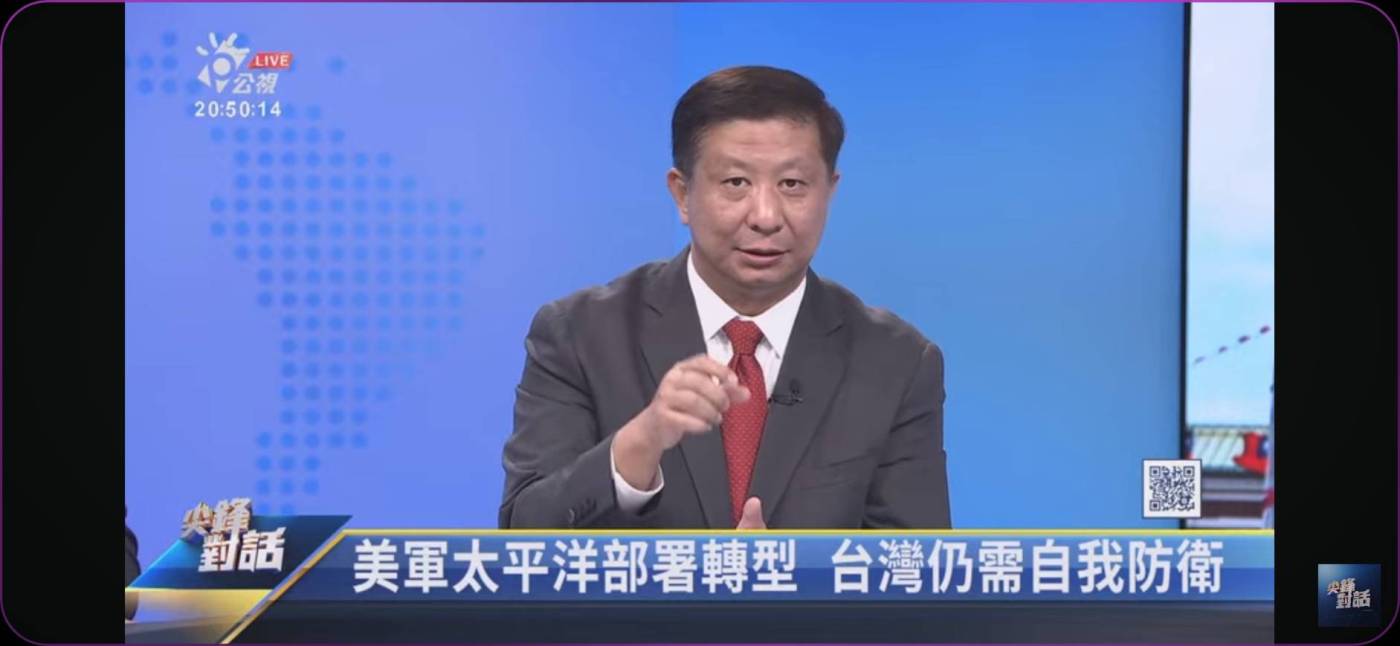
台日友好萬一碰上戰爭,是否承受得住考驗,美日兩國才在離台灣最近的與那國島,部署反艦飛彈,但是日本新聞通信調查會2026年最新民調,76.7%受訪者對中國可能對台動武感到危機,但若臺灣遭到軍事攻擊,超過8成受訪者不支持自衛隊直接參戰,僅9.9%支持日美共同作戰。美日安保條約究竟能為台海安全提供多少保障?日本政府的安全政策、憲法限制與民意立場,又將如何影響台海局勢?歡迎加入《尖鋒對話》,一起深入探討。(圖片擷取自 公視尖鋒對話 Youtuber 網頁)
來賓
揭 仲(中華戰略前瞻協會研究員)
施孝瑋(軍情與航空網站主編)
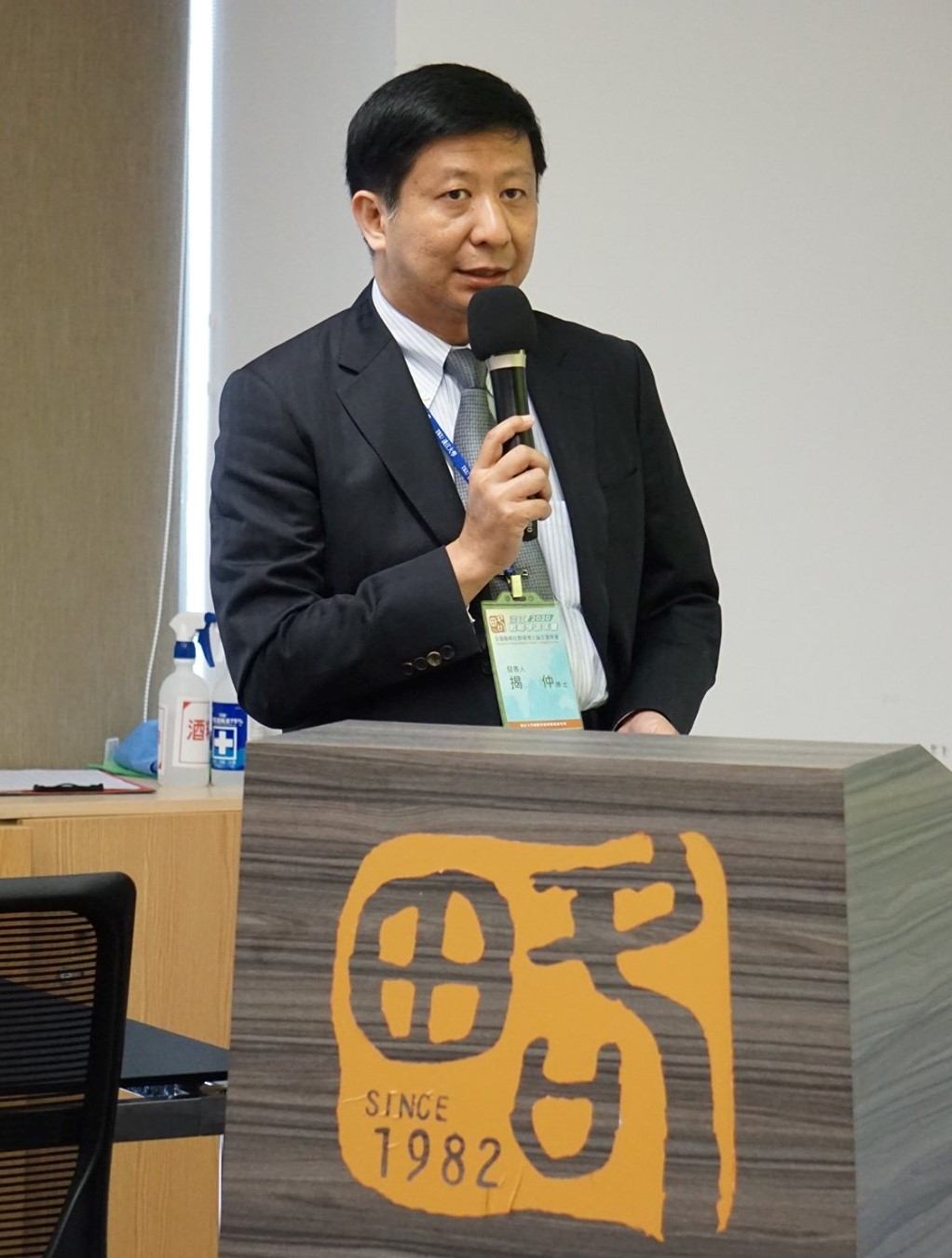
揭仲對《中天新聞網》表示,此次絕非大陸海上民兵船隻首度出現在台灣東部敏感海域;事實上,在2021年7月30日上午,海巡署東部分署就曾發現2艘大陸籍漁船,「瓊三亞漁72107號」及「瓊三亞漁72108號」進入蘭嶼周邊的12浬領海範圍內,隨即派出海巡艦艇前往驅離,並一路伴隨監控直到大陸漁船航行離開相關水域為止。
揭仲指出,從相關跡證顯示,2021年7月30日出現在蘭嶼領海範圍內的2艘大陸漁船,實際上是肩負情蒐任務的海上民兵船,理由包括:
一、當年7月30日仍在大陸官方發布的休漁期間內,該2艘漁船卻出現在遠離母港的蘭嶼海域。
二、從海巡署公布的驅離畫面可知,這些大陸漁船在上層結構加裝不少衛星天線。
三、中科院於當年7月27日、7月28至30日,以及8月2至4日,在屏東的九鵬基地規劃數波武器實彈射擊,蘭嶼則緊鄰這些演習區的東南邊緣。
揭仲表示,8月初該艘民兵船在大陸海警船艦與科研船的陪同下到達台灣海域,研判其動機除了如部分學者所擔心的,演練日後在海警掩護下,由民兵對海纜實施破壞外,未來也可能會執行下列任務。首先是在海警船艦掩護下,由民兵船假冒漁船實施對台灣東部的近距離情蒐任務,當我方海巡艦艇出面驅趕時,海警船則出面干預,一方面掩護擔任情蒐任務的民兵船撤離,同時在台灣東部海域創造執法、「護漁」的例證,支援其對台灣的法律戰訴求。
其次是未來大陸漁船可能在民兵船帶領、海警船護航的情況下,到台灣東部海域作業,創造漁船在此海域作業、海警船在此執法護漁的例證,支援其對台灣的法律戰訴求。
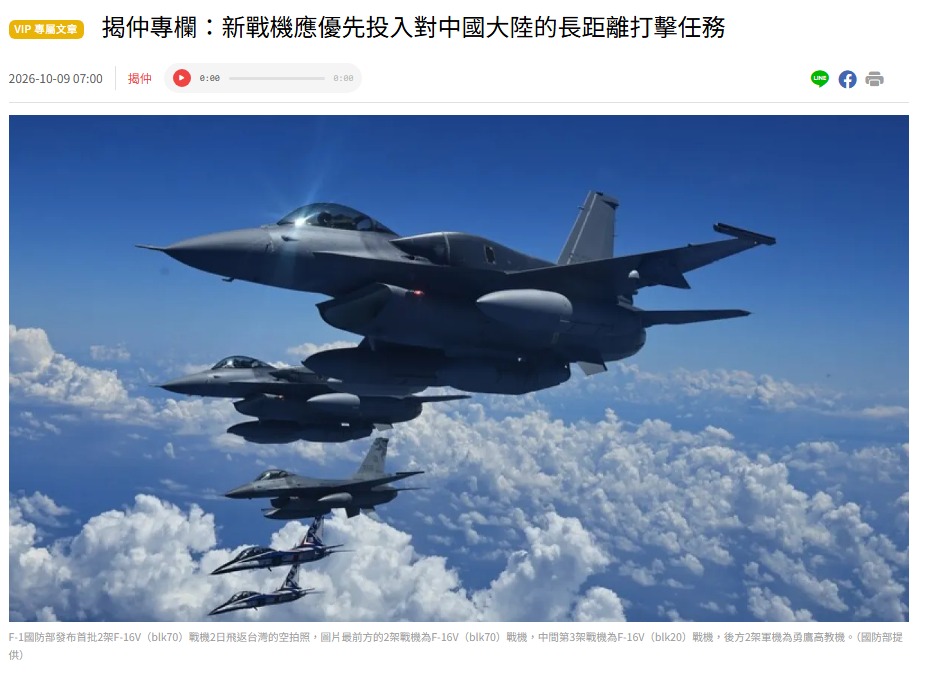
或許國軍更該思考的是,在引進具適型油箱與更大推力的F-16C/D Block70戰機後,是否該優先將這批作戰半徑更長、具備先進可執行對地面目標掃描與測繪之AN/APG-83 AESA雷達、籌載更重的戰機,投入對中國大陸東南沿海軍事目標的長距離打擊任務,增加國軍跨海打擊的火力與彈性。
華府為了使後續進行干預時,能減少國內與國際進行說服的變數,還是認為應等共軍首波的飛彈與火箭落在台灣和澎湖、讓中共在美國國內與國際間,成為毫無爭議、率先用軍事手段破壞現狀的行為者;故「強烈」建議國軍應先承受共軍的「第一擊」,然後才能對中國大陸東南沿海的軍事目標發動攻擊。
若國軍能讓F-16C/D Block70戰機具備對中國大陸沿海軍事目標實施長距離打擊的能量,並使這些單位在國軍偵測到共軍飛彈與火箭大量離地時緊急升空,就有可能在空中保持一支戰力相對完整的源頭打擊戰力;更重要的是,就算國軍的C5ISR系統受損,這些新戰機還是有可能藉Link-16或未來的Link-22,從友軍甚至美軍接收最新的指示與攻擊目標情資,繼續執行反擊任務。而F-16C/D Block70戰機更大的作戰半徑與武器酬載量,也使其執行對中國大陸軍事目標的長距離打擊任務時,在攻擊目標與接近路線上有更多的選擇,讓共軍被迫將相對不足的先進防空系統進一步分散。(圖片擷取自風傳媒網頁)
去年全旅動員的新竹關西步兵206旅,擬召集超過3000人、報到率高達 98%,其他召訓單位也有高達99.3%者;但據媒體記者查證,今年後備軍人實際參演率僅約69%,合法申請免召者近30%。許多教召人員在回顧時,不約而同提到單位有不少缺額,若干單位報到率據說低於三分之二,似乎只有台北市後備旅的報到率比較理想,另一個全旅動員的台南市後備旅,報到率可能只有60%上下。
當後備步兵旅的火力骨幹–砲兵營,不僅火力和射擊指揮程序嚴重過時,連拖火炮、載彈藥的運輸車輛都不足,試問能有多少戰力?當後備步兵旅砲兵營嚴重缺乏戰力的情況下,下轄五個幾乎只靠雙腿、又嚴重缺乏軍士官之步兵營的後備步兵旅,恐怕會大而無當,不如改為專門守備特定陣地或據點的守備大隊或守備中隊,說不定還更有效益。
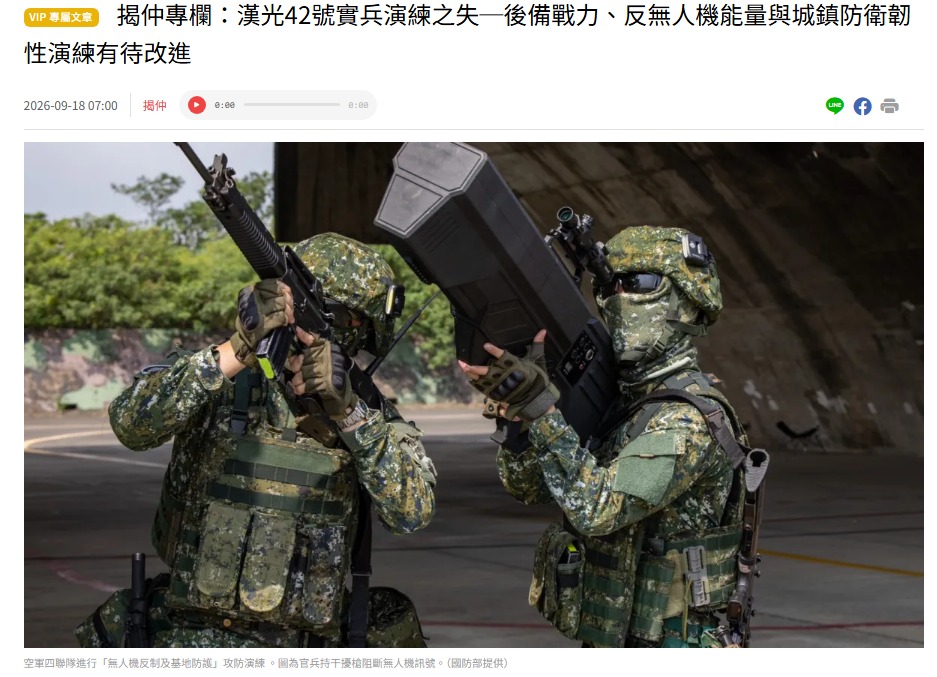
在今年實兵演練中,國軍已先後編成無人機大隊與無人機中隊,準則也已初步完成,使參演部隊在無人機的運用上,比去年明顯進步;但地面部隊不僅仍未配發野戰反無人機系統,在無人機對地面作戰所造成的衝擊方面,也缺乏足夠的認識。
但當場景來到國軍已在光復大橋、南港展覽館捷運站與北投一帶與共軍交戰時;屆時前述「戰時民生物資配售」制度,勢必會因為社會機能與地方政府行政效能的喪失,而無法運作!
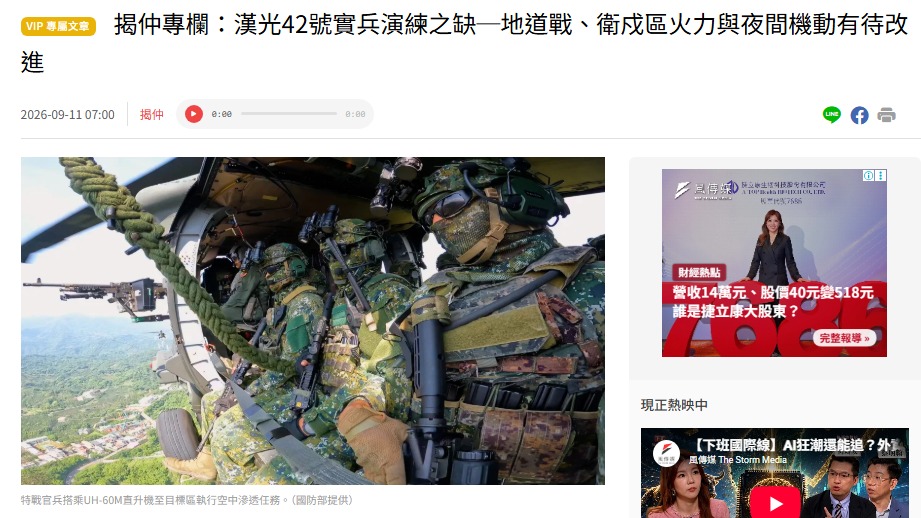
仍缺乏地道戰的相關準備
首都衛戍部隊缺乏重型火力
夜間機動安全意識不足
要防止共軍利用聯外交通設施快速進入台北市,除了各聯外橋梁與隧道的阻絕,對台鐵、高鐵、捷運等地下隧道的「地道戰」準備,也應成為國軍的重要課題,以防止共軍利用這些地下隧道進入台北市區。因為光是捷運,就有板南線、松山新店線與中和新蘆線等三條是採地下化,加上台鐵與高鐵,共有五條可作為共軍自外縣市進入台北市區的地下通道,對中樞防衛作戰的重要性,不亞於各聯外橋梁與隧道。
美軍的城鎮作戰經驗充分顯示,對城鎮與都會區常見的混凝土牆與鋼骨結構的建築,戰車與火炮等重型火力仍然非常重要。2017年菲律賓陸軍在民答那峨清剿武裝叛亂組織時,就廣泛運用105公厘榴彈砲作為直接火力,於近距離摧毀厚實的混凝土牆,讓躲在牆壁後方的叛軍非死即傷。這絕非雲豹甲車的40槍榴彈與30公厘鏈砲,所能做到的。
綜觀整個實兵演練,地面部隊在夜間機動時比較普遍的缺失,是所有車輛似乎是全程開頭燈行軍,這在共軍開始攻擊前的「備戰部署」階段或許還無可厚非;但在開戰後、尤其是進入「聯合反登陸」與「縱深防禦及持久作戰」階段,共軍已掌握戰場局部空中優勢,其中型無人機、甚至野戰部隊的戰術型無人機也開始大量出現在台灣本島戰場上空時,這種車隊夜間開大燈實施道路機動的方式無疑會非常危險,恐怕上路後不久,就會引來共軍大量的無人機或地面砲火,以致損失慘重。(圖片擷取自風傳媒網頁)
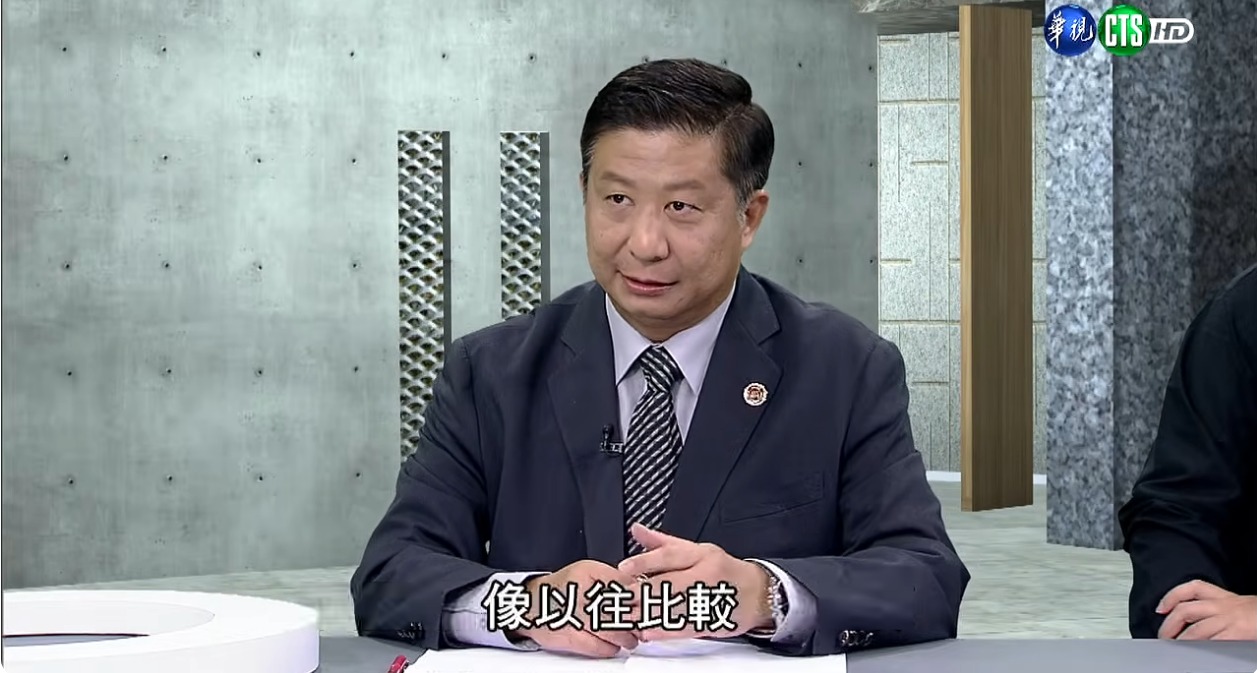
一、 透過主持人、專家學者及隨軍記者座談,分析國軍因應敵情威脅與戰爭型態轉變,近幾年從 24 小時晝夜演練、去中心化指管及臨機狀況處置,發展至 10 天 9 夜持久作戰、縱深防禦、跨區增援、無人系統應用及全社會防衛韌性,呈現國軍部隊在戰場不確定環境下,能以任務為導向,展現實戰化訓練之新貌。
二、 學者專家進一步解說,今年漢光 42 號演習聚焦於「分散式指管與戰力保存」、「兵、火力跨區機動增援」、「無人系統與聯合火力」及「城鎮防衛與軍民整合」等重點,並借鏡美軍導入反向
簡報及計畫預演精神,提升國軍部隊自主應變及同步作戰能力。三、 隨軍記者分享個人見聞,將新式裝備與無人機大隊納入防衛作戰驗證,使漢光演習與 2026 城鎮韌性演習深化整合,從第一線部隊作戰、後備兵力動員,到交通、醫療、通訊、物資及地方政府與民間資源協力,檢視的不只是單一部隊戰力,更是面對高強度衝突時,國家整體防衛體系能否承受衝擊並維持作戰的韌性。(圖片擷取自國防部政治作戰局 Youtube)
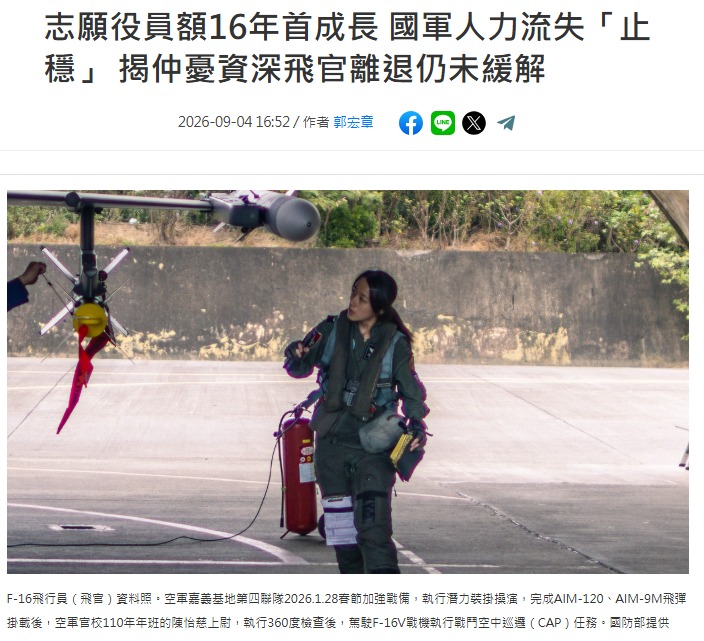
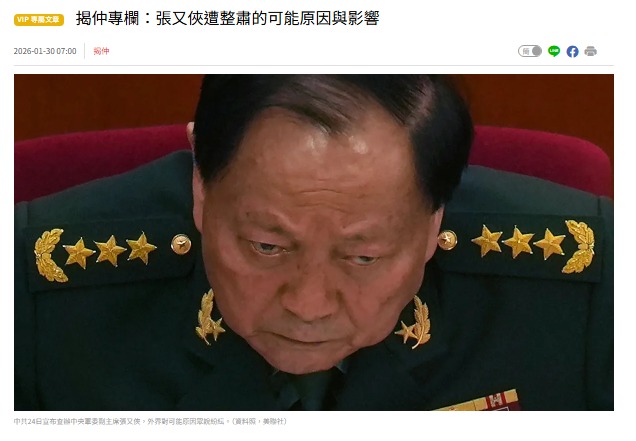
揭仲表示,民國116年國軍志願役官士兵的「預算員額」為15萬8223人,較民國115年15萬3965人,增加4258人,是113年以來的首度成長,顯示國防部減少志願役人員流失的努力初見成效;但隱憂依舊存在,116年「飛行軍官續服現役獎助金」編列7億5578萬2千元,不僅比115年編列數減少3235萬2千元,且是112年以來連續第四年下降,顯示國軍飛行部隊的領導骨幹,資深少校與中校飛官流失情形並未漸緩。(圖片擷取自 太報 網頁)
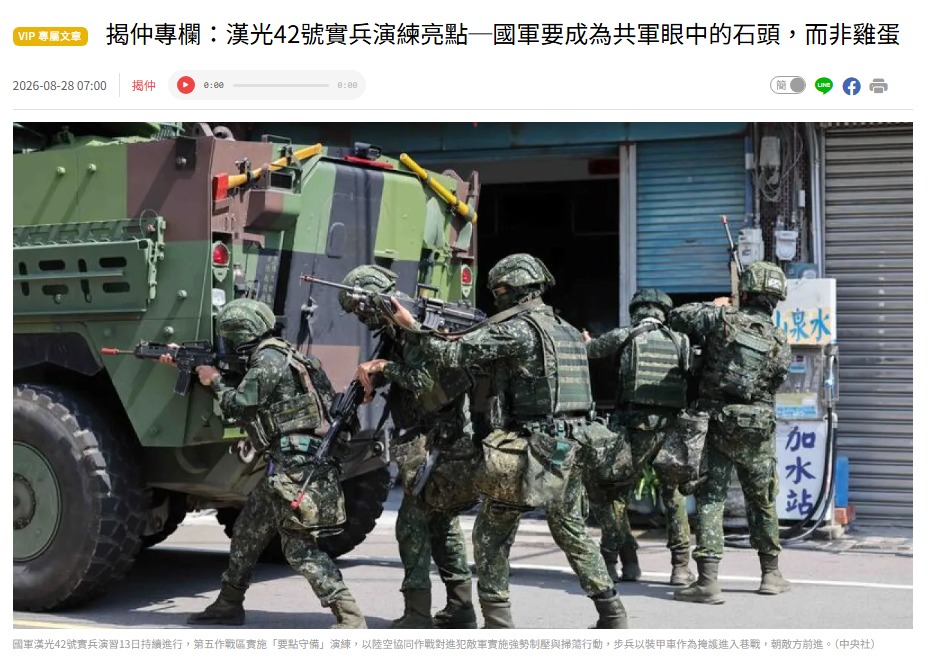
國軍漢光42號演習實兵演練,自2026年8月5日起至8月14日,共十天九夜,採不間斷的方式連續實施,估計完成超過400個課目,目前已知的演練課目就多達117個。
今年的漢光42號實兵演練與往年相較,有許多值得稱道的部分。
在本島進行國土防衛戰,包括城市戰,必然會對社會及民眾造成重大衝擊。但國人應該認清:如果國軍對國土防衛和城鎮戰做好充分準備,則在共軍眼中,台灣將是一塊堅硬、難以啃碎的石頭。反之,若國軍僅有在沿海或灘岸地帶的作戰準備,那麼在共軍眼中,台灣將成為雞蛋,外殼雖硬但內部只有液態的蛋白和蛋黃。共軍只要在蛋殼上打出一個洞,整個蛋殼就會龜裂、崩塌,讓蛋白和蛋黃成為敵人的美食。
如果想影響北京的判斷,並延遲北京將武力犯台列為解決台灣問題優先選項的時間點,國軍必須在共軍眼中成為一塊石頭、而非雞蛋。(圖片擷取自風傳媒網頁)
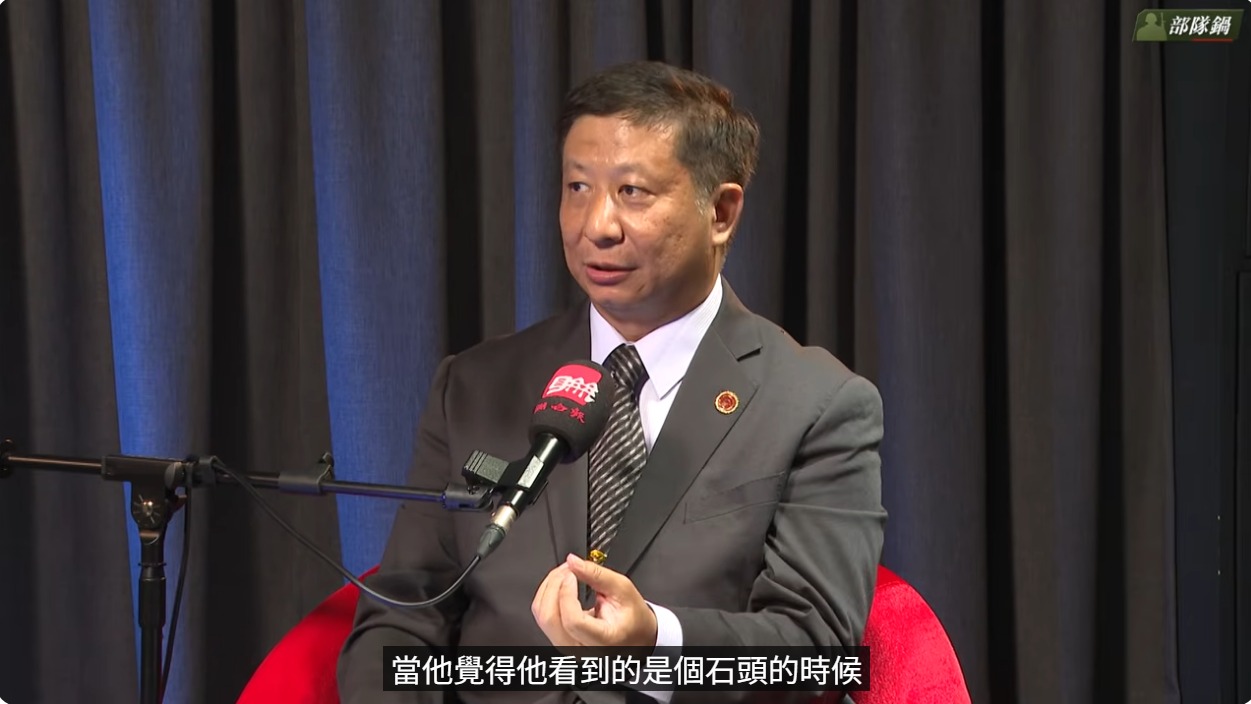
為期10天9夜的漢光42號演習總算落幕了!這一次隨著6月的「立即備戰」、7月的「聯合防禦」到8月的「漢光42號」,到底有沒有呈現完整的連貫性?中間跟過去又有哪些不同?當海空優勢不再是絕對保證,國軍如何從傳統海空聯合反登陸,轉向縱深與城鎮的持久防禦?
本集重點
*放棄制空制海?防衛思維如何轉向「縱深防禦」與「城鎮戰」
*石頭與雞蛋的思維轉變 海岸線後方的防衛是關鍵
*跨區增援與訊跡管理 大部隊跨作戰區可行性有多高?
*淡江大橋與關渡防線 炸橋總是充滿不確定性?
*憲兵轉型衛戍區指揮部 如何統籌防衛任務
*著便服的留置作戰?敵後留置演練引發爭議主持人 : 聯合報軍事記者 徐宇威
來 賓:國防安全研究院委任副研究員 揭仲
(圖片擷取自 聯合報 Youtube 頻道 )#漢光演習 #淡江大橋 #武力犯台 #縱深防禦 #城鎮戰 #衛戍區指揮部 #留置作戰 #跨區增援
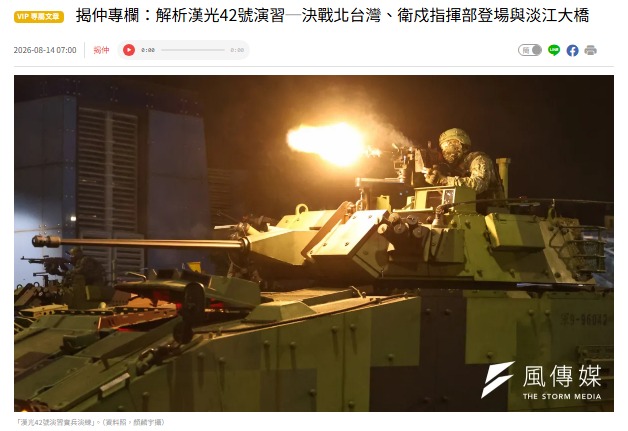
參謀本部這次漢光實兵演練的主場景,就是「決戰北台灣」, 可從下列跡象看出 :
第一個跡象,是參謀本部從8月5日至9日,多次實施自其他地區抽調部隊支援北部作戰區的課目,1包括從南部抽調一個完整的自走砲營進行台西縱走,長距離機動至新北與桃園交界地帶的戰術位置。
第二個跡象,是國軍除8月6日夜間,首度於淡江大橋實施10小時的封橋阻絕演練;也在8月9日與10日,於連結八里台北港與大台北地區的台64線快速道路上,實施觀音山隧道阻絕演練。
第三個跡象,是8月9日進入「聯合反登陸、濱海打擊及灘岸戰鬥」階段後,國防部長顧立雄即視導北部第三作戰區的聯合火力協調中心。
最遲在8月9日,國軍就以憲兵指揮部為主體,轉型成立「衛戍區指揮部」,負責統合、指揮責任區內所有的主戰、守備、後勤支援等部隊,顧立雄部長也在10日上午視導「衛戍區指揮部指揮所」,瞭解衛戍區指管系統運作及防衛作戰部署。這可能是歷年漢光演習,首度公開證實戰時將由憲兵部隊為核心,轉換成「衛戍區指揮部」,統一指揮衛戍區內所有部隊。
「決戰北台灣」:備戰部署與戰力防護階段
「決戰北台灣」:聯合反登陸與縱深防禦作戰階段
淡江大橋在5月12日完工通車,導致對首都衛戍作戰至關重要之淡水河出海口兩岸的防衛態勢,發生劇烈變化。共軍若成功奪取並運用淡江大橋,從淡水河南岸登陸的共軍主力就能由登陸基地,馬上左轉經淡江大橋進入北岸;一旦共軍能利用淡江大橋迅速將重兵投入出海口北岸,則只要衝出淡水市區,就會進入地勢對攻擊軍較為有利的關渡平原,直逼台北市;進而使國軍強迫共軍主力進入淡水河與新店溪南岸城鎮都會複雜地形的意圖落空! (圖片擷取自 風傳媒網頁)
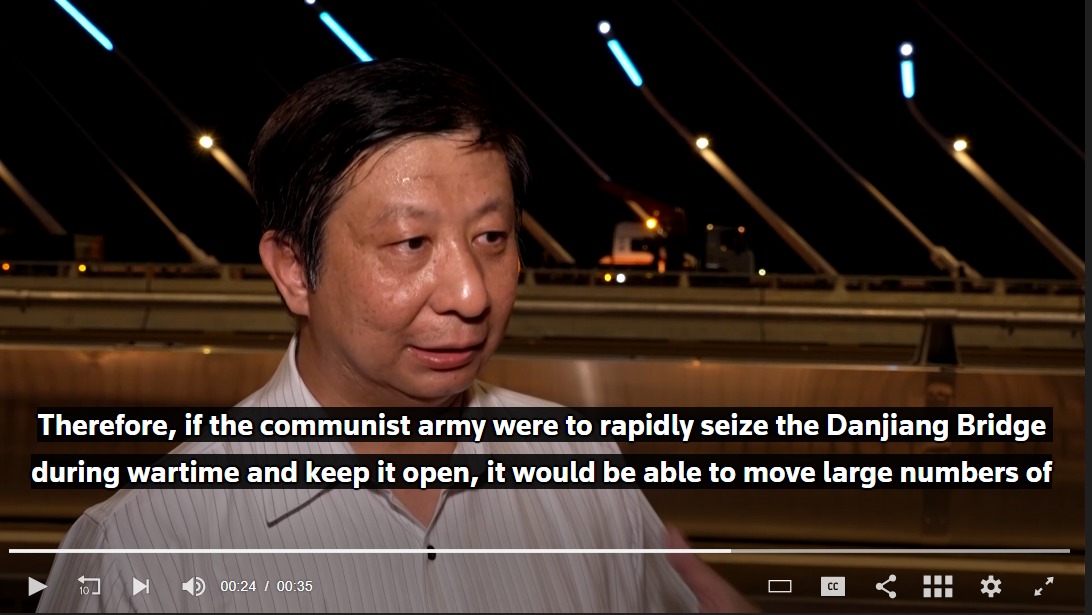
2026年8月6日晚間在淡江大橋接受路透社訪問談 “國軍為何要在漢光演習中,演練以阻絕設施封堵淡江大橋”(圖片擷取自路透社新聞網頁)
/https://www.reuters.com/video/watch/idRW383107082026RP1/?chan=politics
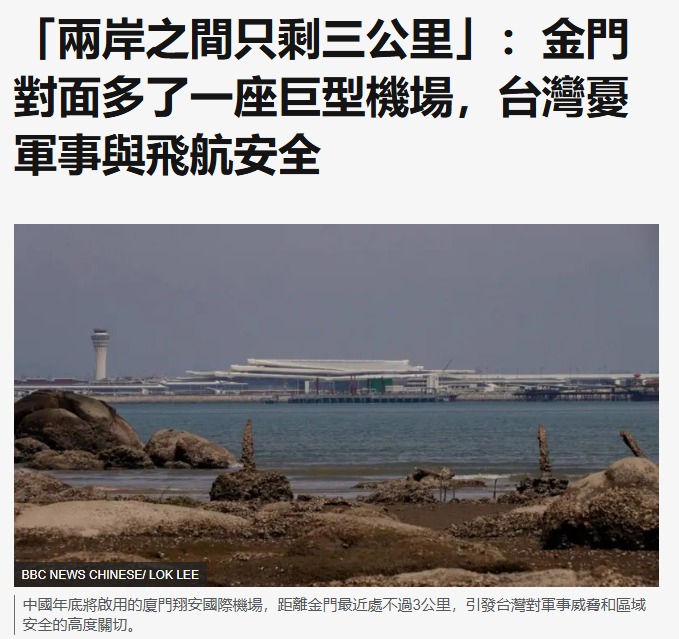
揭仲向BBC中文分析,隨著該機場正式運作,中共海警船與公務船極可能在金門外海常態性巡弋,並以「保護航道安全」為名,對靠近的台灣船隻進行檢查、查扣甚至登檢。「當這種狀況出現時,我們的海警船恐怕必須上前阻止。緊張的形勢雖未必升級為衝突,但海域執法的緊張情勢必然增加,」他指出,兩岸海上執法摩擦很可能加劇。揭仲指出,金門禁限制水域的存在凸顯中國法律戰訴求與實際管轄之間的落差。隨著翔安機場啟用,中國不僅可對台灣形成海上施壓,也營造「管轄權既成事實」。
揭仲亦分析,翔安機場若要支援大規模跨海行動或兩棲登陸作戰,仍有明顯限制。他指出,場內倉儲設施多屬商業用途,缺乏軍事防護標準,且未見掩體配置,使軍機或大型運輸機進駐時處於高度暴露狀態。他並提到,美國出售台灣的海馬士(HIMARS)火箭系統,射程約80公里,並能發射射程高達300公里的戰術飛彈,台灣可從金門或台中直接攻擊翔安機場。
「在武力犯台的初期階段,翔安機場恐怕派不上用場。只有在中共已經掌握台灣周邊的制空權與制海權,並成功壓制台灣本島的遠程打擊火力之後,才可能真正發揮作用。」(圖片擷取自 BBC 中文網)
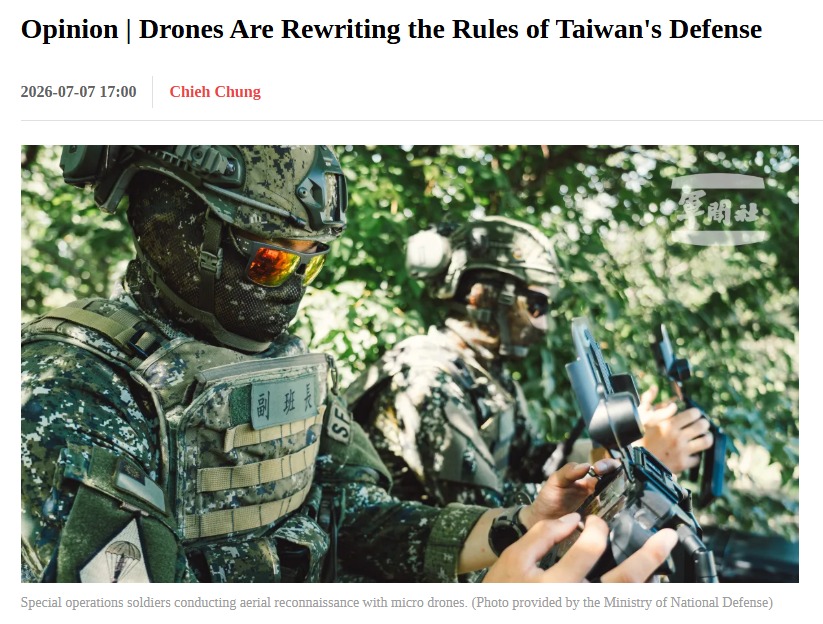
/The article I published on July 3 in Storm Media now has an English version, with the title adjusted to “Drones Are Rewriting the Rules of Taiwan’s Defense", Please refer to it for further details.
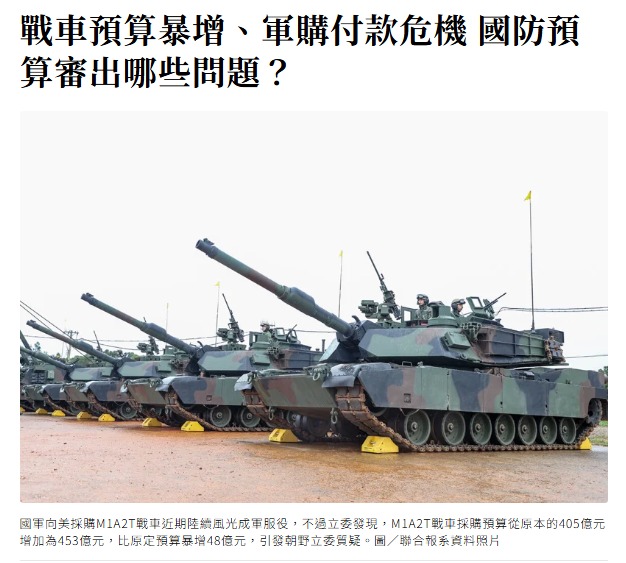
Chung Chieh(揭仲) provided an example, stating that the P&A data is equivalent to a quotation submitted by potential vendors, while the LOA draft is the contract draft during formal negotiations between the two parties. Both sides can negotiate the items, amounts, and payment milestones in the LOA draft before finalizing and signing it. Once the LOA is signed, the U.S. government will represent the purchasing country in subsequent processes such as vendor selection, negotiation, production, and delivery.
The advantage of this system is that the U.S. government will execute project management for the purchasing country; however, the downside is that it excludes certain clauses found in general commercial contracts, such as dispute resolution and arbitration mechanisms, primarily to facilitate the operations of U.S. administrative departments.
He noted that prior to Tsai Ing-wen’s administration, the U.S. insisted that Taiwan’s military procurement procedures must begin with a request for P&A. If the U.S. agreed to provide P&A, it would signify interdepartmental review and consent to sell. Taiwan would then plan its budget and apply for the LOR for LOA based on the P&A. However, since 2016, the U.S. has allowed Taiwan to skip the P&A stage and directly apply for the LOA draft when necessary.
He interpreted that the M1A2T budget exceeding nearly 5 billion NTD is due to the Army’s procurement process for the M1A2T, which aimed to expedite the project by skipping the LOR for P&A stage and relying on price data previously presented in a military exchange meeting. This approach overlooked significant price fluctuations over the years without obtaining a formal quotation, resulting in an underestimated budget. (圖片擷取自聯合報數位版)
/https://vip.udn.com/vip/story/121160/9544803?from=vipudn_maincate_main2
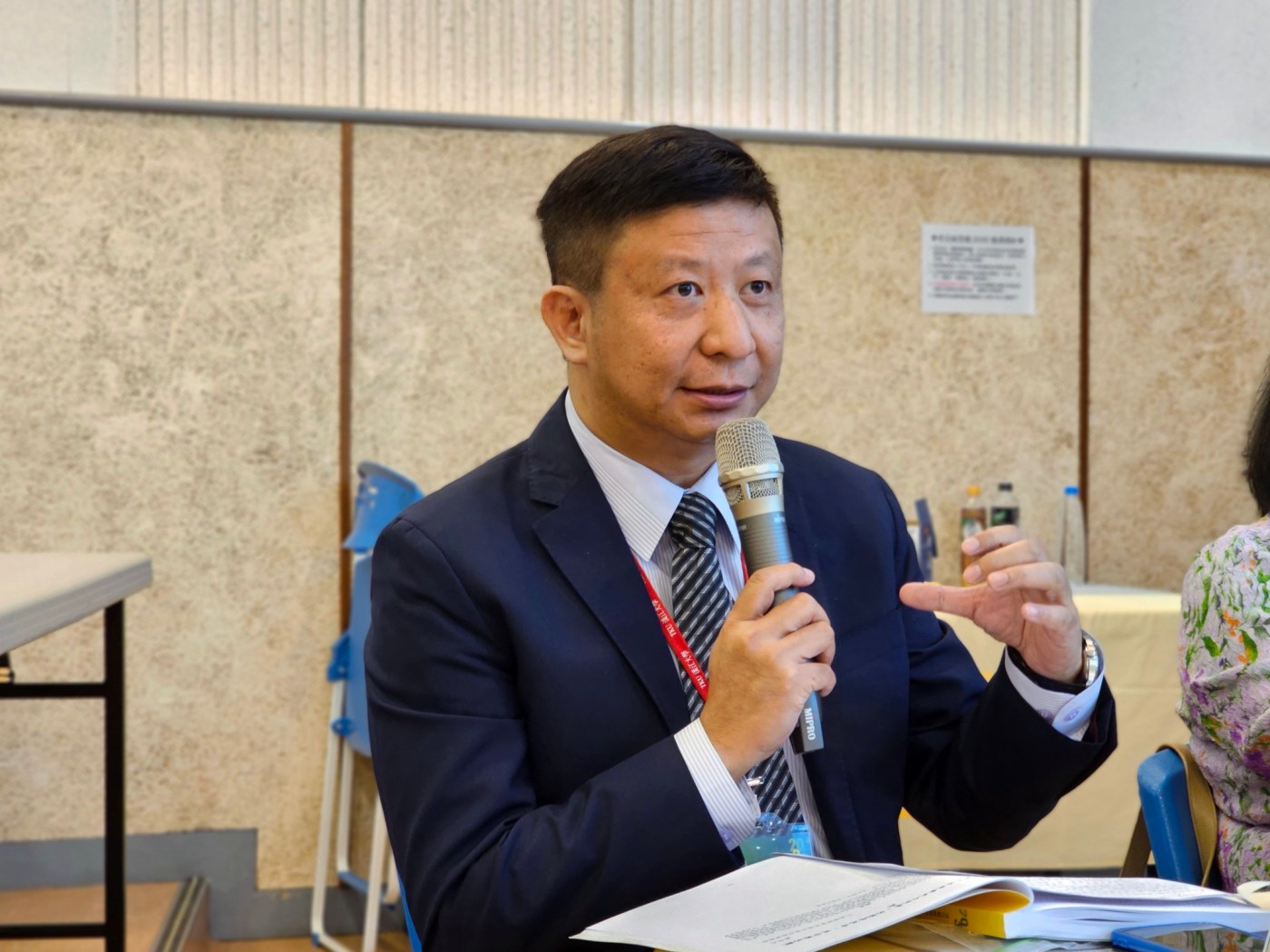
Chung Chieh (揭仲) indicated that further actions should not be ruled out, including more frequent incursions by Chinese Coast Guard vessels into Taiwan’s eastern waters. The heightened activity aims to create opportunities for negotiations with Japan and the Philippines. Taiwan also has the right to assert its claims over its Exclusive Economic Zone (EEZ) and should negotiate with Japan and the Philippines, emphasizing the necessity of defending its interests.
——-
On June 2, Chung Chieh (揭仲), an adjunct assistant professor at Tamkang University’s Graduate Institute of International Affairs and Strategic Studies, analyzed for the Central News Agency that Chinese Coast Guard vessels have previously operated in Taiwan’s eastern waters. Beijing is using this incident to strengthen its patrol intensity, aiming to engage in a legal battle against Taiwan by asserting “One China” across the Taiwan Strait and claiming sovereignty and jurisdiction over Taiwan.
He noted that Beijing has been working to eliminate jurisdictional gaps in its claims, such as areas east of the median line in the Taiwan Strait and restricted waters around Taiwan’s offshore islands. Through this incident, Beijing aims to establish precedents for exercising jurisdiction in the relevant maritime areas via actual actions such as patrols; the emphasis on “first independent actions” serves more of a propaganda purpose.
揭仲說,中方很清楚地想在此次川習會上談台獨及軍售議題,也當然希望有個結果,就看美國是否接受;但值得擔心的是,美方可以在沒有聯合聲明的狀況下,憑著默契行事。例如第二波的140億美元軍售,一直不宣布。
揭仲分析,川普顯然是希望從北京帶回大的交易,而如果川習會一結束,美方馬上宣布140億美元、幾乎是有史以來最大的軍售案,北京難以下台階,可能就會推遲對美採購案,甚至直接取消承諾,因此川普不排除會再拖一陣子。雖然不至於完全取消第二波軍售,因為美國政府今年年初應該就已經非正式地通知國會領袖,此時若要取消會引起國會很多意見;但其實有擱置的空間,拖到期中選舉結束之後,國會應該也能夠承受,畢竟這直接牽涉到很多議員的選情。
揭仲強調,這個手法可能透過默契安排,不必寫在聯合聲明上,而是可以靠行政部門的作為來達成;如今川普將和習近平談對台軍售,朝這方向走的機率不排除更大。
/https://www.mirrordaily.news/story/60513?utm_source=feed_related&utm_medium=mirrormedia
目錄
美國尋求歐洲造船廠合作的原因
在特別預算送出前 美國尋找歐洲合作的努力即已碰壁
特別預算送出後 美國尋求歐洲合作的努力仍未成功
預算審查延宕固然使華府不悅,卻不是讓華府態度轉變的原因。真正導致破局的關鍵,是美國從2002年初到2007年底,始終無法找到願意與美國合作的歐洲國家,包括原本寄予厚望的德國和西班牙。
Abstract:
In writings on logistics mobilization, mainland Chinese academics use the term “large-scale joint operations” to refer to possible use of force against Taiwan. To cope with the resulting challenges for materiel supply support, medical service support, and transportation and delivery support, communist China lists the Eastern Theater Command of the People’s Liberation Army (PLA) as a “basic mobilization area,” which will launch full mobilization in all areas and spheres. Provinces and cities near the Eastern TC are “auxiliary mobilization areas,” which mobilize personnel and resources to compensate for the basic mobilization area’s resource deficiencies. In addition, “specific mobilization” covering businesses such as information, transportation, materials supply, medical service, construction, and energy will be launched across mainland China. Other theaters where “chain reaction warfare” is possible are categorized as “stand-by areas for mobilization,” with target-specific mobilization in limited areas, such as homeland air defense, border defense, maintenance of social order, production of military items, and evacuation of people. The aim is to ensure that armed conflicts and disruptive activities incited by domestic and hostile elements overseas will be effectively neutralized.
Judging from publicly available research and observation of the PLA’s joint logistics support and mobilization systems performance in the fight against the new coronavirus pandemic, we believe that the PLA’s logistics support capabilities for “large-scale joint operations,” whether in materiel supply support, medical service support, or transportation and delivery support, are currently insufficient to reach the goal of “fighting a quick battle for a quick result.” The PLA has taken extensive measures to enhance its logistics mobilization capacity to meet the requirements of “fighting a quick battle for a quick result” in “large-scale joint operations” against Taiwan. These include 12 categories: building theater joint operations logistics support network, completing the construction of a support base system, strengthening the mobile support force, boosting military logistics capacity build-up, establishing informatized joint logistics support capability, upgrading the capability to rescue and evacuate the wounded, improving trans-regional transportation and delivery capability, bringing to perfection the examination of national defense potential, establishing a “pre-positioning mobilization” mechanism, expanding new types of militia and the scale of mobilization of businesses, building an advanced national defense mobilization command information system, and consolidating civil-military integration.
Keywords: large-scale joint operations, PLA reform, provincial military district, joint logistics support force, mobilization, invasion


近期迴響