Chieh-Chung noted that Taiwan’s long-range early warning radar in Leshan (樂山), Hsinchu, has a detection radius exceeding 3,000 kilometers, reaching Inner Mongolia. The launch site this time is within 1,500 kilometers of Leshan, allowing our radar to capture and immediately identify the missile launch location. However, determining whether the missile is a Julang-2 or Julang-3, or whether the submarine was surfaced or submerged, is beyond our capabilities and likely derived from intelligence exchanges.
He stated that although various countries have complained about China’s late notification, the movement of the “Yuanwang" telemetry ship to the South Pacific and China’s announcement of dangerous waters made it clear that the PLA was preparing for a test launch. The U.S. could use satellites and other tools to enhance surveillance of potential launch sites, possibly allowing them to ascertain whether the submarine was surfaced or submerged at the time.
Chieh-Chung also pointed out that if the Julang-3 were launched from the Bohai Sea and traveled northeast over the Arctic, it could reach the entire U.S.; launching from the South China Sea would not reach the U.S. East Coast. With a meeting between Xi and Trump scheduled for September, Beijing likely does not want to overly provoke President Trump, potentially straining the recently eased relations.
/The article I published on July 3 in Storm Media now has an English version, with the title adjusted to “Drones Are Rewriting the Rules of Taiwan’s Defense", Please refer to it for further details.
揭仲解讀,國防部在漢光實兵操演前先展開「立即戰備操演」與「聯合防禦操演」,就是想先藉這兩項操演,強迫各級指參人員與部隊,增加對修訂後的防衛作戰計畫與交戰規定的了解,使8月漢光實兵演練能有更好的實戰訓練效果。
揭仲形容,「立即戰備操演」與「聯合防禦操演」,是讓考生能熟習相關理論架構與內容的「考前複習」,至於漢光實兵演練,則是要訓練考生如何依據理論來解主事者臨場下達的考題,同時檢驗考生解題的成效,甚至希望在解題過程中,發現目前理論的不足之處,進而做出修訂。
他指出,倘若考生在解題前,對理論的架構與內容掌握不足,自然會影響後續解題訓練的成效;這也是國防部為何要在漢光實兵演練前,先用一段時間,讓即將上場的考生、也就是國軍各單位,先熟悉、理解解題所需的理論,即修訂後的防衛作戰計畫與交戰規則,然後再上場解題,以提高訓練效果,更有效地達到驗證計畫之目的。(圖片擷取自聯合報數位版)
/https://vip.udn.com/vip/story/121160/9599679?from=vipudn_maincate_main2
美日菲連環軍演圍中國,環太軍演接上勇敢之盾,美國西太平洋布局是否成形?中國東風亮相還擊,第一島鏈真能困住中國,還是反而暴露美日菲前線風險?
本集聚焦2026環太軍演、美日「勇敢之盾」與第一島鏈軍事布局。美國把戰略焦點拉回太平洋後,日本、菲律賓是否被推向抗中前線?中國東風系列與反介入能力,是否足以破解美國島鏈防禦?台灣又該如何看懂西太平洋軍事變局?
本集看點:
美日菲連環軍演,第一島鏈是否上緊?
環太軍演接勇敢之盾,美國太平洋戰略有何變化?
東風飛彈亮相還擊,美軍島鏈防線會不會破功?
日本、菲律賓角色升高,是嚇阻中國還是替美國扛風險?
台灣在美中軍事角力下,會被放在什麼位置?
(圖片擷取自 中天新聞 " 專家來了" Youtube )
海馬斯朝中國大陸的方向開火,究竟只是演習,還是戰略訊號?
2027到底是開戰倒數,還是中共能力驗收?
當台海危機逐漸逼近,我們必須看清楚真正的答案。我們邀請到「國防安全研究院委任副研究員 揭仲博士」帶大家深入解析!(圖片擷取自SMARTnews Youtube )
北京川習會落幕後,根據美國川普總統的發言,將高達140億美元的對台軍售案視為談判籌碼,並表示暫緩決定。此話一出,隨即引發台海高度焦慮。
雖然美國國會與國務卿盧比歐隨後滅火,強調對台政策未變,但這筆包含增程型愛國者三型飛彈、國家先進地對空防空飛彈系統等關鍵裝備的延宕,究竟會對國軍防禦帶來哪些實質衝擊?面對中共軍機、軍艦的演習與威脅,我們又該如何因應?
本集特別邀請到淡江大學整合戰略與科技研究中心研究員揭仲,他曾擔任國會辦公室主任長達17年,其中15年在國防委員會與外交國防委員會,也是國防部「114年四年期國防總檢討」諮詢委員,將分析川普總統為何公開表示對台軍售,可能作為美國與中國的談判條件,以及這筆140億美元的軍售案的內容,及對台灣防禦的關鍵影響。
此外,更從軍售延遲之際,台灣本身可以採取的因應作為,包括軍售之外爭取商售的可能性,以及無人機防禦的自主研發和部署等,提出見解。並深入剖析華府當前對台海軍事衝突風險的態度,建言台灣可以扮演的角色。歡迎收聽!
中共外交部發言人毛寧6月2日的談話,極可能意味著中共不排除利用這個事件,持續對日菲二國施壓,希望能迫使日菲二國就劃界所衍生的相關事宜,與中共、而非我方談判,建立其管轄權及於臺灣東部海域的新事證;並進一步藉區域各國是與北京談判的事實,將原本僅針對臺灣的矮化性法律戰,轉變為針對中華民國國際人格的國際性法律戰。
中共也很可能想藉機以抗議、反制日菲片面談判劃界為由,開始派海警船編隊,以每個月至少幾次、每次至少持續一定時間的模式,常態化進入台灣東面、我方專屬經濟海域卻遭日菲納入談判範圍的海域巡弋。換言之,中共想利用此一情形,伺機建立在臺灣東部、我方依《國際海洋法公約》主張的專屬經濟海域範圍,常態化巡弋甚至執法等「管轄」的事實,將侵蝕我方管轄權的法律戰行動範圍,擴張到臺灣東部我方的專屬經濟區海域。(圖片擷取自風傳媒網頁)
The remarks made by Chinese Ministry of Foreign Affairs spokesperson Mao Ning(毛寧) on June 2 likely indicate that the China does not exclude the possibility of using this event to continue applying pressure on Japan and the Philippines. The aim is to compel these two countries to negotiate related matters arising from the delimitation with the China, rather than with Taiwan, thereby establishing new evidence of its jurisdiction in the eastern waters of Taiwan. Furthermore, by leveraging the fact that regional countries are negotiating with Beijing, this could transform the originally Taiwan-targeted degrading legal warfare into an international legal warfare aimed at undermining the international persona of the Republic of China.
The China may also seek to use this opportunity to protest against and counter the unilateral delimitation negotiations by Japan and the Philippines by beginning to deploy Coast Guard vessels in a manner that normalizes their patrols in the waters off Taiwan’s eastern coast—areas that Taiwan claims as its EEZ but which have been included in the negotiation scope by Japan and the Philippines. In other words, the China aims to exploit this situation to establish a routine presence of patrols and even law enforcement within the scope of Taiwan’s EEZ in the eastern waters, thereby expanding the legal warfare actions that erode Taiwan’s jurisdiction into these areas.
Chung Chieh(揭仲) provided an example, stating that the P&A data is equivalent to a quotation submitted by potential vendors, while the LOA draft is the contract draft during formal negotiations between the two parties. Both sides can negotiate the items, amounts, and payment milestones in the LOA draft before finalizing and signing it. Once the LOA is signed, the U.S. government will represent the purchasing country in subsequent processes such as vendor selection, negotiation, production, and delivery.
The advantage of this system is that the U.S. government will execute project management for the purchasing country; however, the downside is that it excludes certain clauses found in general commercial contracts, such as dispute resolution and arbitration mechanisms, primarily to facilitate the operations of U.S. administrative departments.
He noted that prior to Tsai Ing-wen’s administration, the U.S. insisted that Taiwan’s military procurement procedures must begin with a request for P&A. If the U.S. agreed to provide P&A, it would signify interdepartmental review and consent to sell. Taiwan would then plan its budget and apply for the LOR for LOA based on the P&A. However, since 2016, the U.S. has allowed Taiwan to skip the P&A stage and directly apply for the LOA draft when necessary.
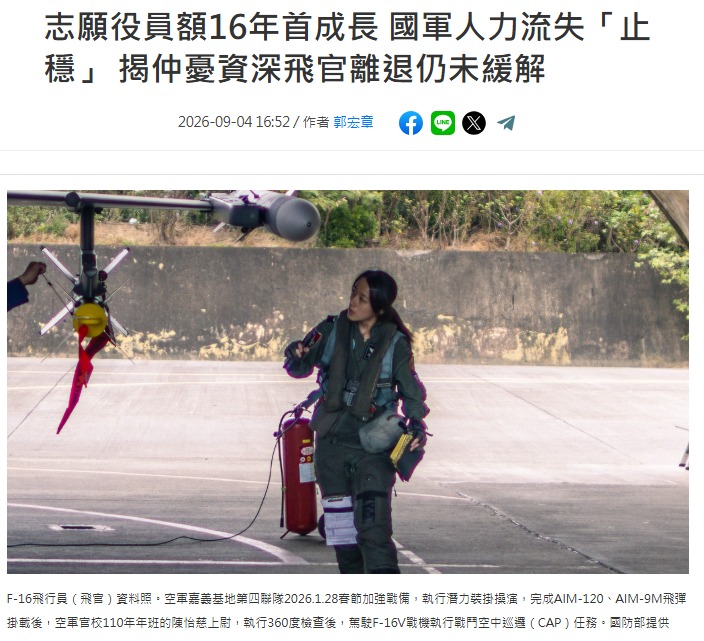
He interpreted that the M1A2T budget exceeding nearly 5 billion NTD is due to the Army’s procurement process for the M1A2T, which aimed to expedite the project by skipping the LOR for P&A stage and relying on price data previously presented in a military exchange meeting. This approach overlooked significant price fluctuations over the years without obtaining a formal quotation, resulting in an underestimated budget. (圖片擷取自聯合報數位版)
/https://vip.udn.com/vip/story/121160/9544803?from=vipudn_maincate_main2
Chung Chieh (揭仲) indicated that further actions should not be ruled out, including more frequent incursions by Chinese Coast Guard vessels into Taiwan’s eastern waters. The heightened activity aims to create opportunities for negotiations with Japan and the Philippines. Taiwan also has the right to assert its claims over its Exclusive Economic Zone (EEZ) and should negotiate with Japan and the Philippines, emphasizing the necessity of defending its interests.
——-
On June 2, Chung Chieh (揭仲), an adjunct assistant professor at Tamkang University’s Graduate Institute of International Affairs and Strategic Studies, analyzed for the Central News Agency that Chinese Coast Guard vessels have previously operated in Taiwan’s eastern waters. Beijing is using this incident to strengthen its patrol intensity, aiming to engage in a legal battle against Taiwan by asserting “One China” across the Taiwan Strait and claiming sovereignty and jurisdiction over Taiwan.
He noted that Beijing has been working to eliminate jurisdictional gaps in its claims, such as areas east of the median line in the Taiwan Strait and restricted waters around Taiwan’s offshore islands. Through this incident, Beijing aims to establish precedents for exercising jurisdiction in the relevant maritime areas via actual actions such as patrols; the emphasis on “first independent actions” serves more of a propaganda purpose.
近期迴響