摘 要
共軍學者指出,「智能化戰爭」是依託感測器的感知能力及電腦的資料處理能力,通過模型與演算法賦予機器以智慧,借助強大的通信網路將機器與人進行編組,或以機器主戰的方式進行作戰。此種戰爭的主要特徵是「機器主戰、萬物互聯、演算法致勝」;而「人工智能、網路資訊技術和機械化技術群」,是支撐「智能化戰爭」的三大支柱。研究「智能化戰爭」與發展遂行此種戰爭的能力,已成為當前共軍的重要課題。
目前共軍在發展遂行「智能化戰爭」的能力方面,已經建立了「從武器平台性能到戰術火力計算等一系列的輔助決策模型」,並在「數據融合、態勢評估」等方面取得一定的成果;也開展了「作戰方案輔助擬制、軍事智能決策支持」等方面的先期探索研究;在「無人作戰平台」與「作戰指揮控制」等也獲致若干成果。但整體而言,還是處於「研究理論綜述性的成果比較多,實用性的成果較少,裝備智能化水平還有待提高」的情況。
研判共軍為發展遂行「智能化戰爭」的能力,所設定目標為在2035年以前具備初步遂行智能化戰爭的能力、然後在2049年以前具備完整遂行智能化戰爭的能力。若共軍如期於2035年達成目標,則當時間越接近2035年,共軍遂行武力犯台的作戰能力勢必會大幅成長,對我方造成嚴重的威脅。
關鍵字:智能化戰爭、人工智慧、無人化、武力犯台

摘 要
儘管現階段中共武力犯台的機率不高,但中共已大幅增加在台灣周邊、包括海峽中線以東之軍事活動的頻率與強度,使兩岸機艦發生海空事件的機率劇增,倘若處理不當,極可能迅速上升為軍事衝突,甚至引爆各方都未預期之戰爭。因此,建立「兩岸海空事件處理機制」,對兩岸都有一定的重要性;但兩岸由於政治關係緊張,衍生出包括「中共是否會將此一機制刻意與其『軍事安全互信機制』建立連結」、「適用範圍如何界定」和其他許多難以解決的困難。
經過近11年的磋商,中共與日本在2018年6月8日正式啟用「中日海空聯絡機制」,初步建立在東海、特別是雙方防空識別區重疊區域內,軍用機艦遭遇時的具體規則,卻又迴避了敏感的釣魚台主權歸屬問題。 「中日海空聯絡機制」雖然還有許多不足之處,但已經能對「兩岸海空事件處理機制」的建立帶來下列啟示:第一,可以使用「聯絡機制」或「處理機制」等名稱,降低政治敏感性;第二,對適用範圍採取模糊化處理;第三,可直接援引《海上意外相遇規則》的相關規定;第四,「中日海空聯絡機制」在談判過程中,採用的「兩步走」模式。
關鍵詞:海空事件、中日海空聯絡機制、海上意外相遇、海峽中線、西南空域
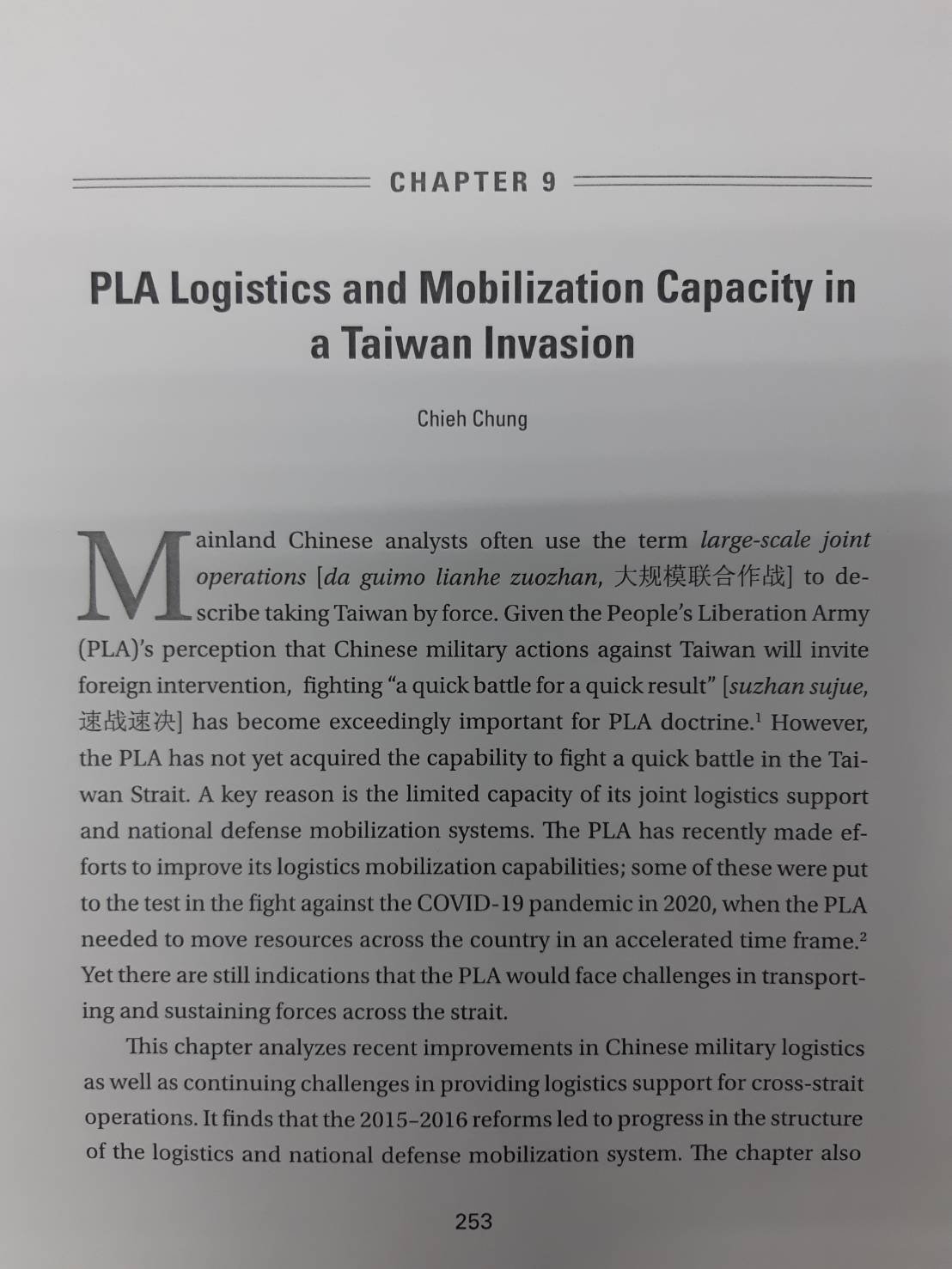
美國國防大學(National Defense University)最新出版:《跨越海峽:中國軍隊準備對台戰爭》(Crossing the Strait: China’s Military Prepares for War with Taiwan), 其中將我在2020年解放軍研討會中發表的論文進行修改後, 收錄為全書第九章:「共軍武力犯台的後勤與動員能量評估」, 本書已開放線上購買, 也有全文的PDF版 , 相關連結如下
/https://ndupress.ndu.edu/Publications/Books/Crossing-the-Strait/

拙作〈軍改後共軍聯合後勤保障體系和國防動員體系運作情形:以支援湖北抗疫為例〉, 很榮幸能被收錄於 國立政治大學國際關係研究中心所出版最新一期64卷第4期的《中國大陸研究》(科技部社會科學核心期刊, TSSCI) 中 , 謝謝各位師長的指導與編輯委員會的協助
#解放軍軍改 #聯勤保障部隊 #省軍區 #國防動員 #疫情防控狙擊戰 #新冠肺炎

Abstract:
In writings on logistics mobilization, mainland Chinese academics use the term “large-scale joint operations” to refer to possible use of force against Taiwan. To cope with the resulting challenges for materiel supply support, medical service support, and transportation and delivery support, communist China lists the Eastern Theater Command of the People’s Liberation Army (PLA) as a “basic mobilization area,” which will launch full mobilization in all areas and spheres. Provinces and cities near the Eastern TC are “auxiliary mobilization areas,” which mobilize personnel and resources to compensate for the basic mobilization area’s resource deficiencies. In addition, “specific mobilization” covering businesses such as information, transportation, materials supply, medical service, construction, and energy will be launched across mainland China. Other theaters where “chain reaction warfare” is possible are categorized as “stand-by areas for mobilization,” with target-specific mobilization in limited areas, such as homeland air defense, border defense, maintenance of social order, production of military items, and evacuation of people. The aim is to ensure that armed conflicts and disruptive activities incited by domestic and hostile elements overseas will be effectively neutralized.
Judging from publicly available research and observation of the PLA’s joint logistics support and mobilization systems performance in the fight against the new coronavirus pandemic, we believe that the PLA’s logistics support capabilities for “large-scale joint operations,” whether in materiel supply support, medical service support, or transportation and delivery support, are currently insufficient to reach the goal of “fighting a quick battle for a quick result.” The PLA has taken extensive measures to enhance its logistics mobilization capacity to meet the requirements of “fighting a quick battle for a quick result” in “large-scale joint operations” against Taiwan. These include 12 categories: building theater joint operations logistics support network, completing the construction of a support base system, strengthening the mobile support force, boosting military logistics capacity build-up, establishing informatized joint logistics support capability, upgrading the capability to rescue and evacuate the wounded, improving trans-regional transportation and delivery capability, bringing to perfection the examination of national defense potential, establishing a “pre-positioning mobilization” mechanism, expanding new types of militia and the scale of mobilization of businesses, building an advanced national defense mobilization command information system, and consolidating civil-military integration.
Keywords: large-scale joint operations, PLA reform, provincial military district, joint logistics support force, mobilization, invasion
論文摘要
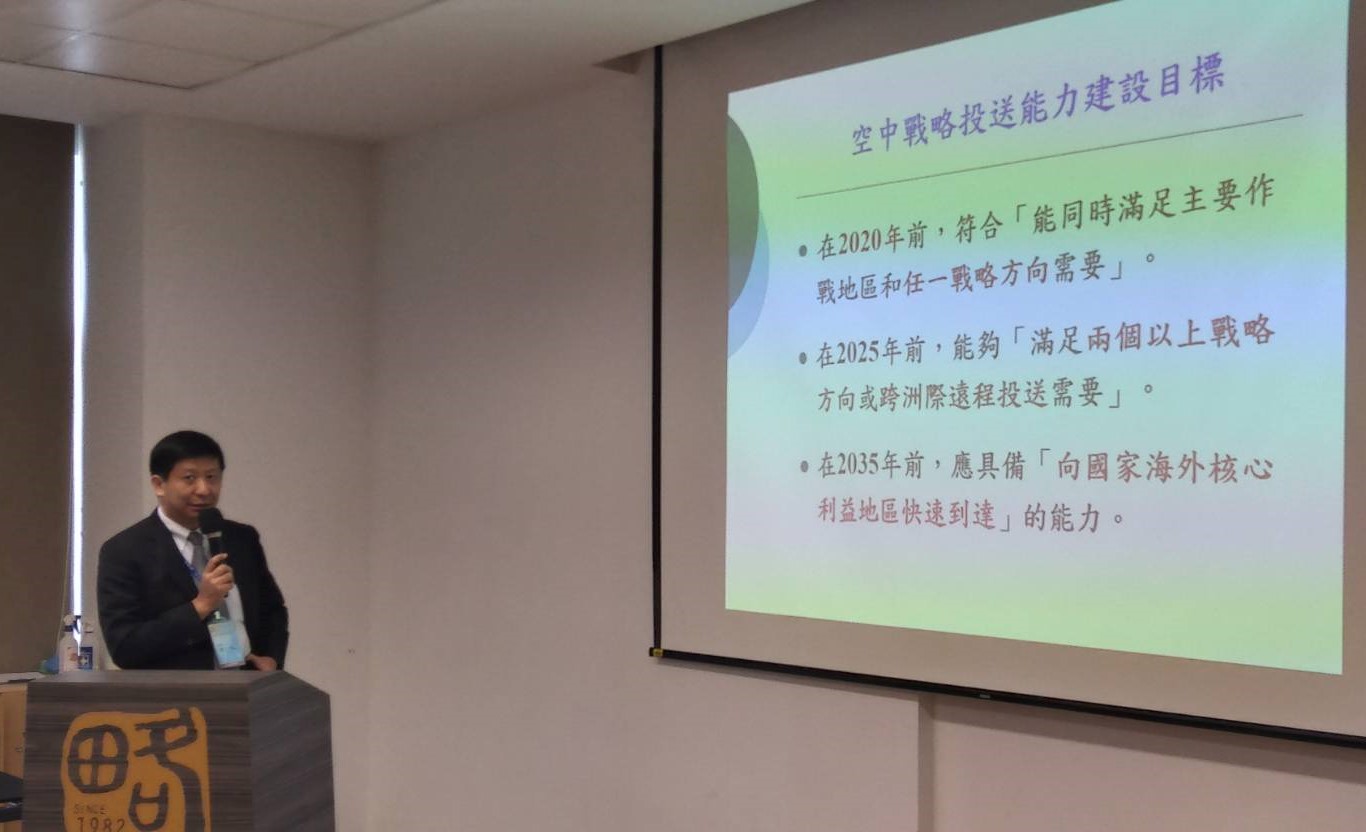
軍事力量的境外運用,已成為今後共軍的重要任務;而要能用兵於境外並達成戰略目的,就有賴於戰略投送能力;尤其是能將建制兵力精確、高速、直接地投送到任務地區,並能快速展開形成戰鬥力的空中戰略投送能力。
目前共軍空中戰略投送能力,在實體部分主要由「軍隊建制空中戰略投送力量」、自民航業抽調飛機組成的「戰略投送支援機隊」,和「戰略投送基地」等三種力量所組成;此外,機場作業能力和指揮管理資訊化程度,也與空中戰略投送的能力密不可分。
儘管近年共軍在提升空中戰略投送能力上,有不少的著墨,但由於優先順位和相關工程因涉及大量民用設施、所需資源龐大等因素,目前仍存在許多問題。研判共軍未來仍會按「以軍隊航空運力為主體、以民用航空運力為補充」的原則,持續擴充可執行空中戰略投送的載具數量,同時會繼續推動戰略投送體系建設,並持續提升空中戰略投送指揮管理的資訊化,及加速完成部隊行動方案。
本文擬透過對共軍學者針對相關議題的研究成果,與中共官方媒體報導內容的分析,探討「共軍戰略投送與空中戰略投送之意義」、「共軍空中戰略投送能力的現況」、「共軍空中戰略投送能力的問題」、「後續階段強化重點」等,期望能獲得初步性的框架,作為後續研究的起點。
關鍵字:戰略投送、空中戰略投送、戰略投送支援機隊、戰略投送基地

Abstract
If mainland China uses force against Taiwan, whether its People’s Liberation Army (PLA) can “fight a quick battle to achieve quick results” to prevent against intervention by major military powers and possible chain reactions is of critical importance. One of the elements of “a quick battle with quick results” is for the PLA to precisely project within the shortest time possible a significant number of whole-unit troops and large amounts of materiel from all parts of the mainland to Taiwan proper and surrounding theaters of operations.
However, in a campaign against Taiwan, the PLA will deploy a huge number of troops and the scale of the war, its extent and intensify, and the materiel consumed will be enormous. Strategic delivery for such a campaign will be more difficult than any similar or same missions the PLA had ever executed up to now. The PLA originally expected its strategic delivery capability to reach by 2020, after the completion of this most recent round of military reform, the level required for an invasion of Taiwan. As a matter of fact, there is still considerable room for the PLA to improve in “delivery power,” “ground infrastructure,” and “informatization and development of a strategic delivery system.” Likewise, “joint sea-air delivery training” and “protection for strategic delivery” need to be greatly improved as well.
To acquire strategic delivery capability adequate for an invasion of Taiwan as early as possible, the PLA took measures like “Enhancing Delivery Forces” and “Perfecting the Delivery System” in 2011. After the most recent military reform formally kicked off in 2015, the PLA began to focus on “establishing an integrated joint delivery command system,” “civil-military integration,” “planning and launching joint delivery drills,” “strengthening Eastern Theater Command’s execution capacity” and others. In our estimation, the focus in the future will be on “raising the level of informatization,” “beefing up protection for strategic delivery,” “planning and launching realistic sea-air delivery drills,” “perfecting relevant laws and regulations and technical standards,” and “reinforcing the strategic channel in the East China Sea Direction.” The aim is to improve overall strategic delivery capability.
Keywords: strategic delivery, PLA reform, joint attack operations against a big island, civil-military integration
After the PLA completed preliminary adjustments to its command and control mechanism, joint operations command mechanism, force structure and troop organization, “comprehensive enhancement of realistic combat training” has become its next-phase focus of reform.
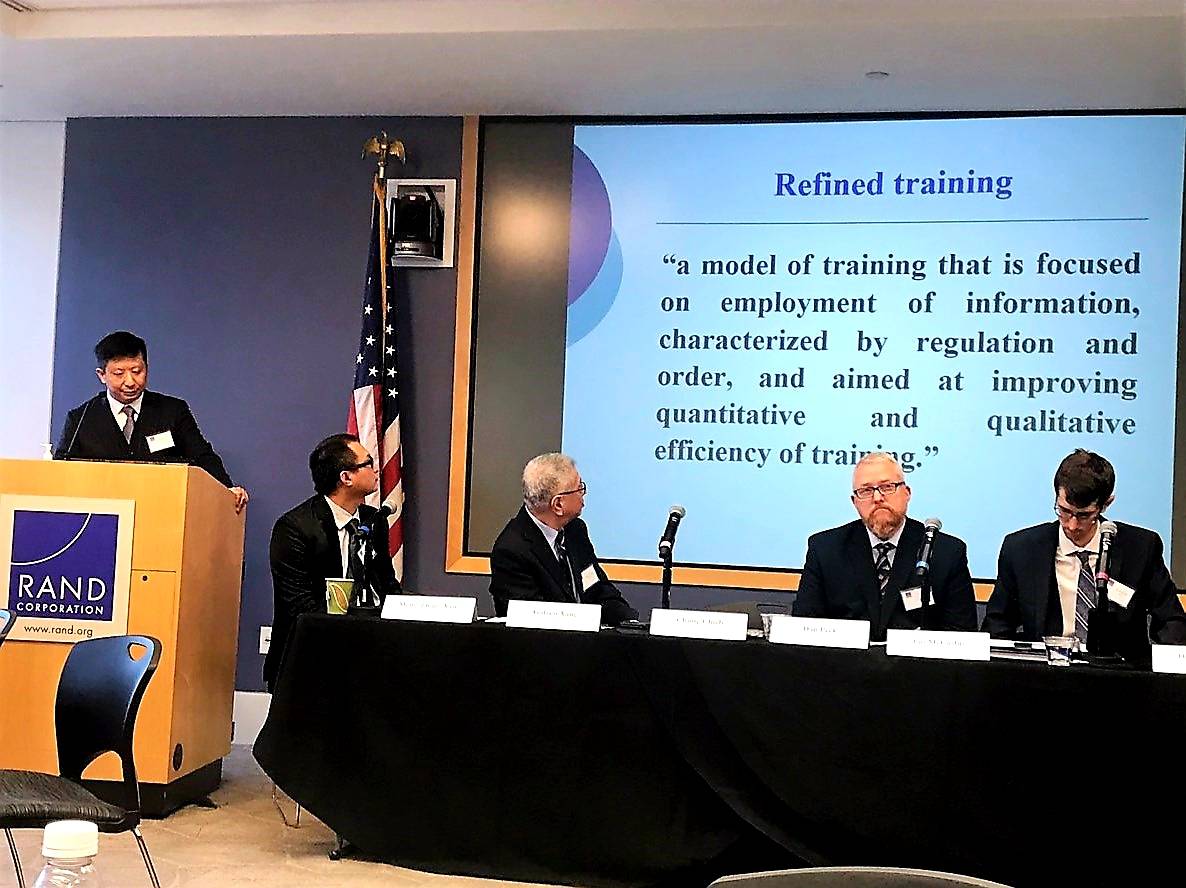
To push military training reform further ahead, the PLA revised its “Outline of Military Training” at the end of 2017 and put the revised edition into practice on Jan. 1, 2018 as the basis for deepening realistic military training.
The newest edition of “Outline of Military Training” is based on the demands of “refined training” in the new age of information warfare. Through subdivision of military training into more specific parts, training objectives are quantified, with each training course, stage, level and service member required to reach standards. The aim is to ensure that units at all levels put training content into practice according to unified standards and quantitative and qualitative requests.
Under the guidance of the revised “Outline of Military Training,” the PLA is very likely to place emphasis on areas such as “confrontational training,” “operational command training and training of new types of combat forces,” “mission topic training and all processes system of systems training,” and “enhancement of base training and training performance evaluation up to the level of realistic combat training.” The aim is to bring military training as close to real-life combat situations as possible. However, problems with “personnel training,” “command platform for training purposes,” “specialized blue army,” “specialized training base,” and “training content” are yet to be solved. The PLA still needs quite some time to reach the goal of modernization.

To cope with the demands of “integrated joint operations(一體化聯合作戰)”, a new operational mode still being explored by the PLA, includes in this round of military reform the transformation of traditional army battalions into a new type of battalion known as “combined arms battalion(合成營)” in an effort to enable the PLA to move toward a “smaller, modularized and multi-functional(小型化、模塊化、多能化)” force structure.
If the PLA attacks Taiwan, the basic tactics for its ground forces to land on Taiwan will be to “destroy nodes, choose most vulnerable sites to land and rapidly gain control(節點摧毀、擇弱登陸、快速奪控)”. But the PLA’s traditional three-tier “division-regiment-battalion” system is in practice an order of battle that cannot function effectively in campaigns against Taiwan because of limitations caused by the island’s topography. Framed within such traditional structure, PLA troops, as the offensive side, will find it hard to break through the defense of Taiwan, the defensive side.
PLA Army combined arms battalions feature capability to land in smaller areas, greater flexibility in forming interoperable capabilities with other specialty arms, and higher levels of informationization. They are suitable to be used in amphibious assaults on Taiwan. The PLA may use combined arms battalions as the backbone of a modular force against Taiwan that receives reinforcements from other arms or units, such as special operations, army aviation, amphibious elements subordinate to group armies, air force’s airborne branch, and elite troops of the marine corps. It poses a great threat to the security of Taiwan.

 揭仲的國防與中共軍事專題研究
近期迴響